
Skenfrith History
Skenfrith sits in a bend of the River Monnow, where it forms the border between Wales and England. Its Welsh name is Ynysgynwraidd. Ynys means an island or a river meadow, and the rest is usually said to be a personal name, though nobody agrees whose.
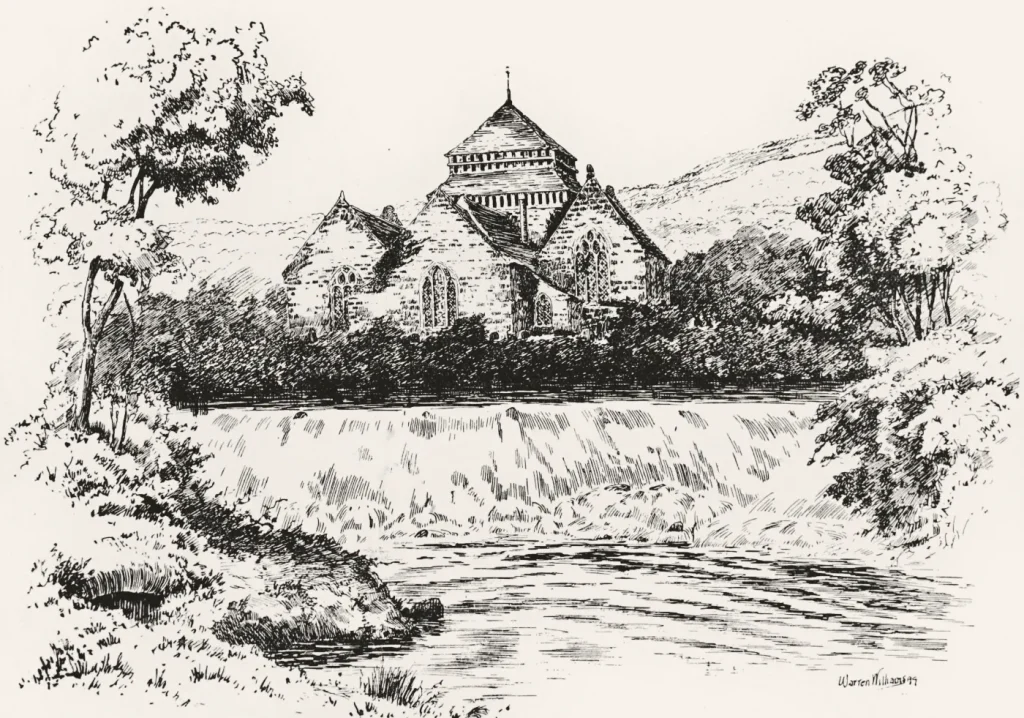
For eight centuries the village has been made of the same three things: a castle, a church and the river crossing. In 1899 the Welsh artist Warren Williams walked these lanes sketching the landmarks, and his drawings show the village much as we still find it a mile upstream from Ruthlin.
On this page: The castle · St Bridget’s Church · The bridge and the mill · The Monnow and Ruthlin · Garway · About the drawings
Skenfrith Castle and the Three Castles
The first castle here was earth and timber, put up by the Normans to guard the routes between Wales and Hereford. In 1135 Skenfrith was joined with Grosmont and White Castle into a single lordship, the Three Castles, and in 1201 King John gave all three to Hubert de Burgh.
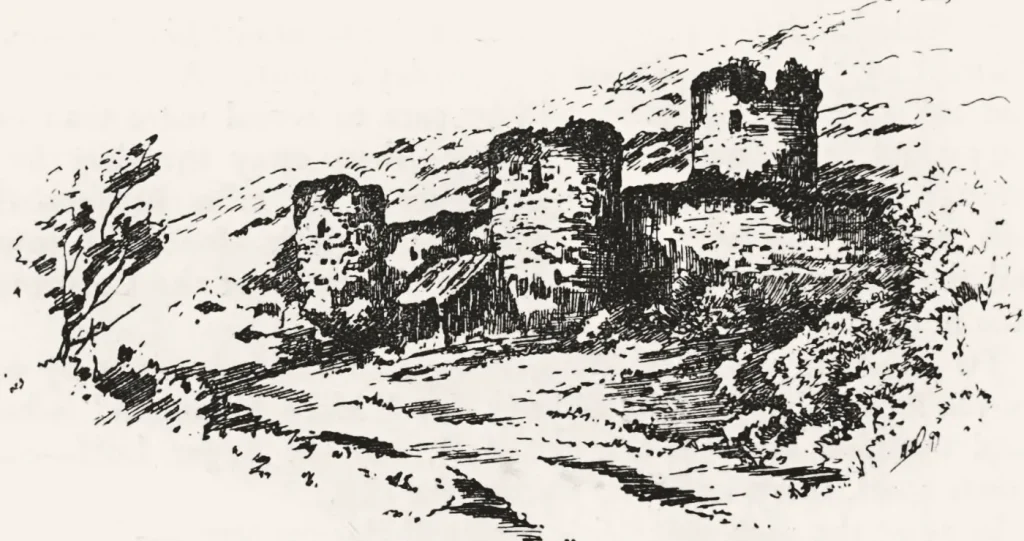
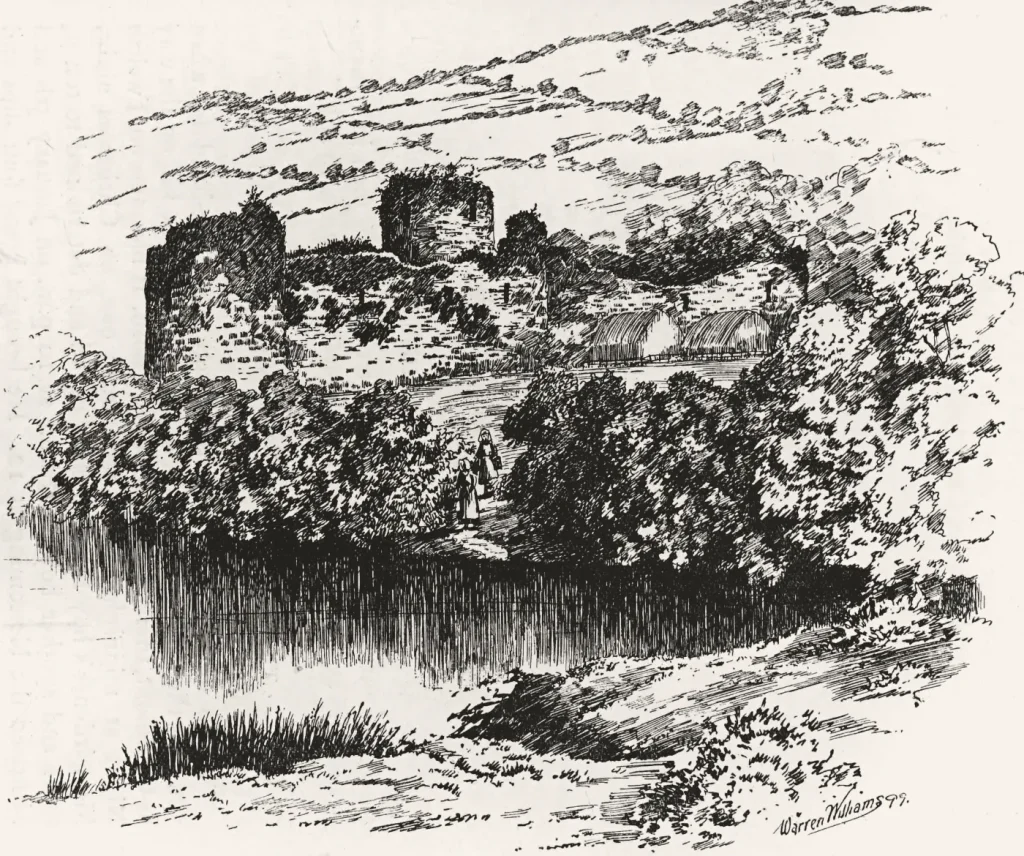
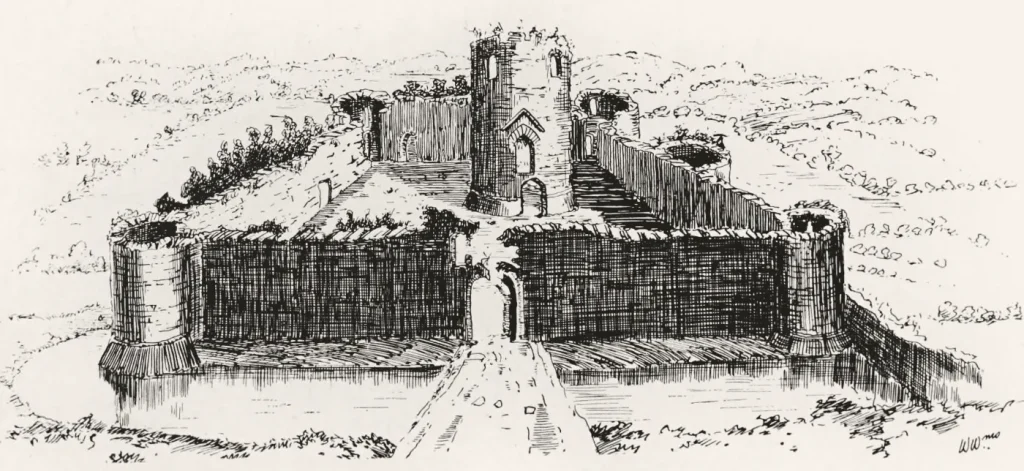
Hubert rebuilt Skenfrith in stone between 1219 and 1232: a four-sided curtain wall with round towers at the corners and a round keep in the middle, about 12 metres high. A winter flood in 1219 swept away his first efforts, so the inside was raised with river gravel. The moat, fed from the Monnow, was dug a generation later, in the 1250s or 1260s.
From 1267 the castles belonged to the Earls, later Dukes, of Lancaster, and they stayed with the Duchy of Lancaster until 1825. Skenfrith was already disused by 1538 and described as ruinous in 1613. Today it belongs to the National Trust and is looked after by Cadw. It is free to wander round.
Visiting Skenfrith Castle. The castle is open all year during reasonable daylight hours. There is a small free car park in front with room for about six cars, and dogs on short leads are welcome. Some of the old steps are uneven, and the grass by the river can be slippery. On summer days the Monnow below the castle walls is a favourite spot for a swim, and the castle is one of the three on the Three Castles Walk, a route of about 19 miles linking Skenfrith with Grosmont and White Castle.
The Buck’s View drawing takes its name from the brothers Samuel and Nathaniel Buck, who engraved “The North View of Skenfrith Castle” in 1732.
There is a village legend that treasure is buried somewhere in the castle. There is also a ghost. To the best of my knowledge nobody lately has seen either.
Skenfrith Castle: questions visitors ask
Is Skenfrith Castle free to visit? Yes. There is no charge and nobody on the gate. It is open all year in reasonable daylight hours. The National Trust owns it and Cadw looks after it.
Where do you park? In the small free car park in front of the castle, which takes about six cars. Overnight parking and camping are not allowed.
Are there toilets at Skenfrith Castle? Not at the castle itself, which has no toilets or café, but there is a public lavatory at the village hall, a short walk away.
Can you swim at Skenfrith Castle? Yes. People swim in the Monnow beside the castle on summer days, and it is allowed. There are no lifeguards, and Cadw, which looks after the castle, asks visitors to take care: the water is deep in places, and after high water the bank is left slippery with silt. The river rises quickly after rain in the hills, so if it is brown or running fast, stay out. Guests at Ruthlin have their own little beach a mile downstream, and we are happy to show you where it is safe to get in and out.
Can I bring my dog? Yes, on a short lead, on the ground-floor areas of the castle.
What is the Three Castles Walk? A waymarked circular walk of about 19 miles (31 km) linking Skenfrith, Grosmont and White Castle, the three castles that shared one lord from 1135. Look for the brown and white castle disc. Most people walk one stage at a time, and we describe the stages on our things to do near Skenfrith page.
How old is Skenfrith Castle, and which is the oldest castle in Wales? The first castle here was earth and timber, built not long after the Norman conquest. The stone castle you see was built by Hubert de Burgh between 1219 and 1232. The oldest castle in Wales is usually said to be Chepstow, begun in 1067 and about 45 minutes’ drive from Ruthlin.
St Bridget’s Church
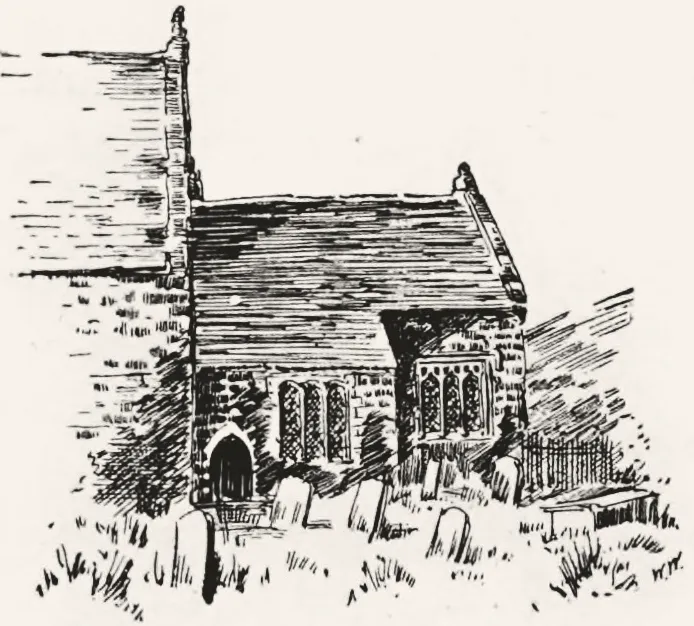
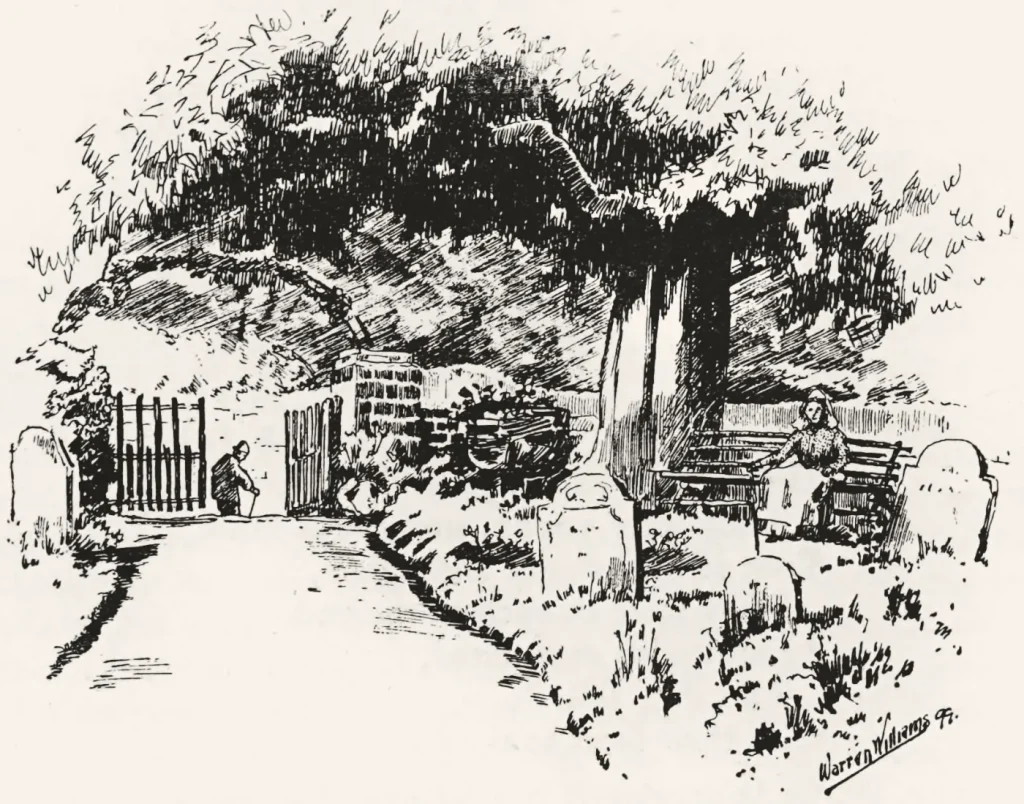
St Bridget’s is thought to date from the reign of King John (1199–1216), with aisles added over the next two centuries. Its squat tower has walls five feet thick, topped by a two-stage timber belfry with a pyramid roof, of the kind known as a dovecote belfry.
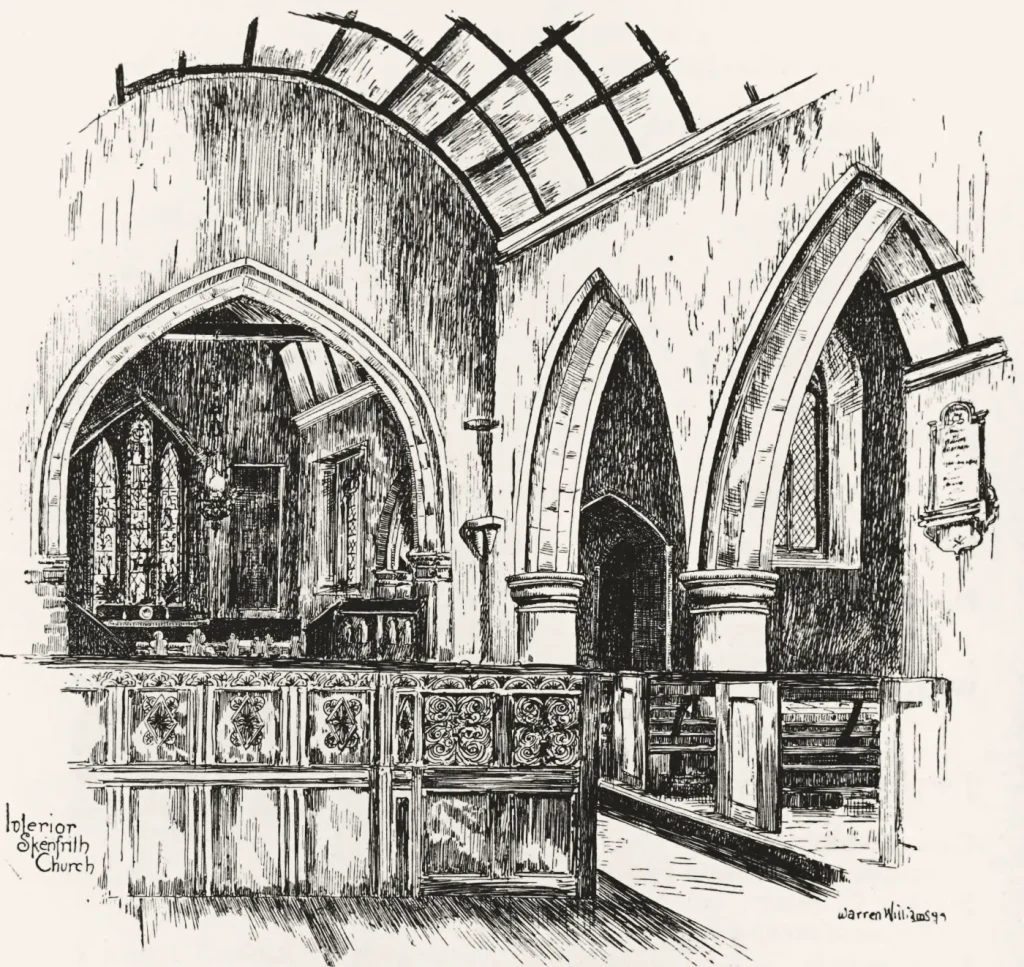
Warren Williams drew the interior just before the church was repaired. The roofs were renewed in 1896, and in 1909–10 the architect William Weir restored the church with advice from the Society for the Protection of Ancient Buildings, which is why the book captions the drawing Before Reparation in 1910.
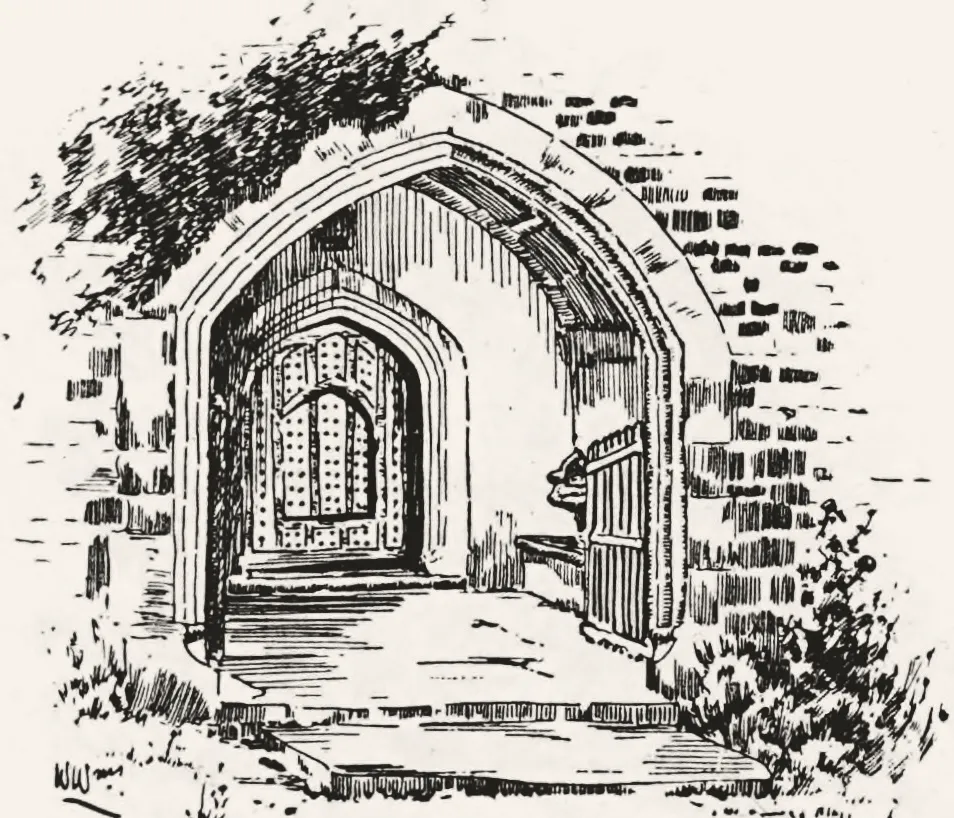
The priest’s door he drew is the small pointed doorway beside the chancel.
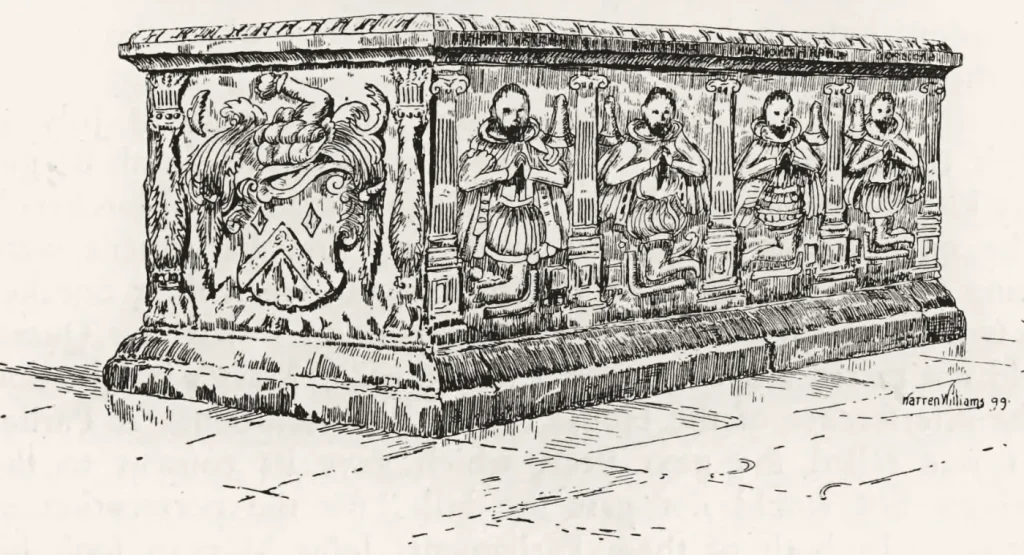
Inside is the chest tomb of John Morgan, who died in 1557. He was steward of the Duchy of Lancaster, the last governor of the Three Castles and twice a Member of Parliament. His wife Anne, who died in 1564, is carved with him on the lid, and kneeling figures line the side. The family’s pew is nearby.
The church’s treasure is the Skenfrith Cope, a medieval embroidered vestment showing the Virgin carried up by angels. It was found in 1848 being used as an altar cloth and is now shown in a case in the church.
The bridge and the mill
The three-arched stone bridge was rebuilt in 1824 at the expense of the County of Monmouth, and an inscription on the parapet says so. Its eastern half stands in Herefordshire, so you cross the border mid-river. The councils can’t quite agree on this, though: the road only gets noticeably worse half a mile on, where ‘Herefordshire’ really begins.
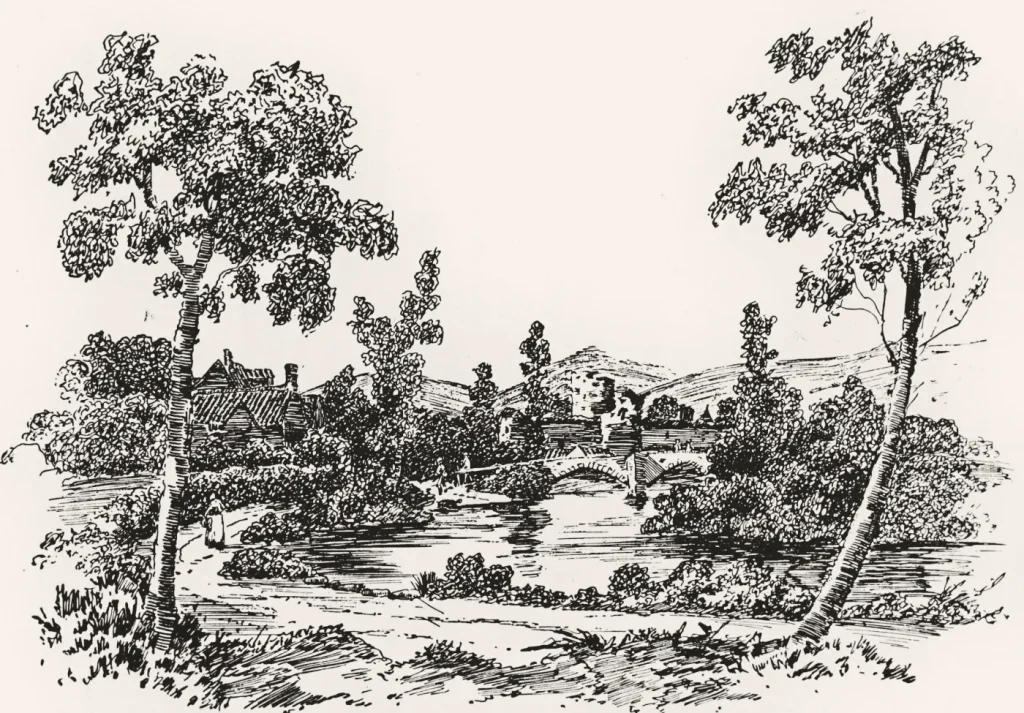
I believe the upriver parapet was taken down during the Second World War so that aircraft wings could be carried across the border by lorry.
Beside it, Skenfrith Mill carries a datestone of 1867. It was still working in the 1990s, by then on electric power, and its iron waterwheel survives.
The Monnow, and Ruthlin
Below the village the Monnow winds between wooded banks. The Darren, or Daren Wood, lies on the English bank in Garway parish, a short walk from Skenfrith, and a footpath loop still runs from the village past Tregate Bridge and the Daren.
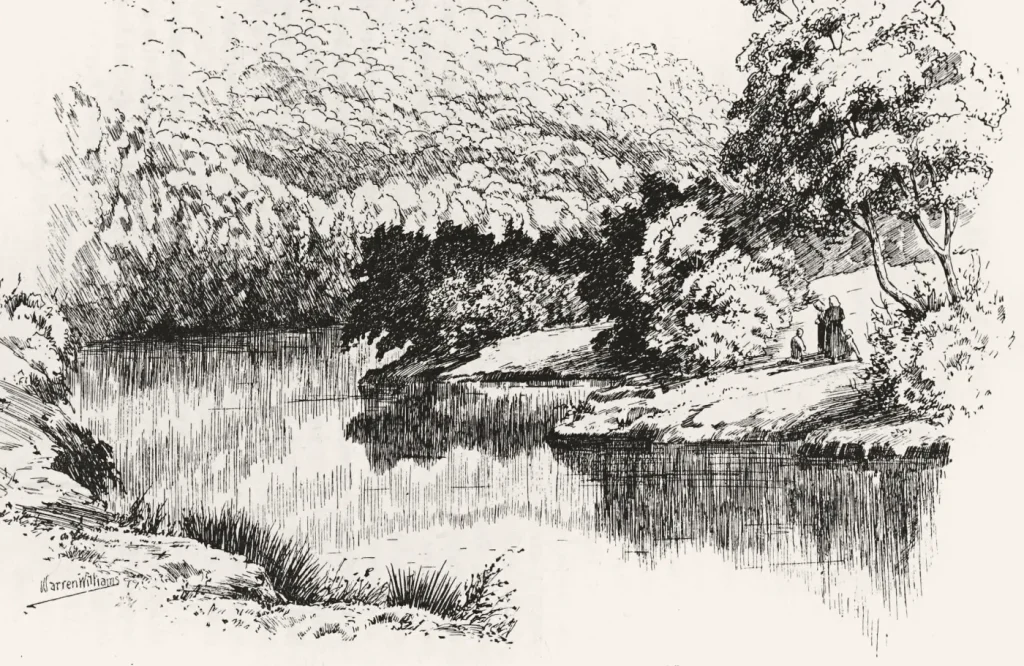
A mile downstream is Ruthlin, our home, first recorded as a farm in 1741. Half a mile further downriver is Ruthlin Mill, first recorded in 1591 as “Rullings… a water grain mill”. By 1722 it had become a paper mill, and papermakers worked it for more than a century, among them William Vaughan, Francis Lewis and William Farr, until it fell empty around 1840 and was sold in 1844 as part of “Rulling Farm”. The old spellings include Rullings, Rutling and Yrychlyn.
The farm buildings are now our home and the guests’ retreat. To my eternal regret, we lost the fishing rights in the 1950s.
Over the border: Garway
Across the river in Herefordshire, Garway church was a preceptory of the Knights Templar in the 12th century. The foundations of its original round nave are still visible, and its tower once stood apart from the church before a passage joined them.
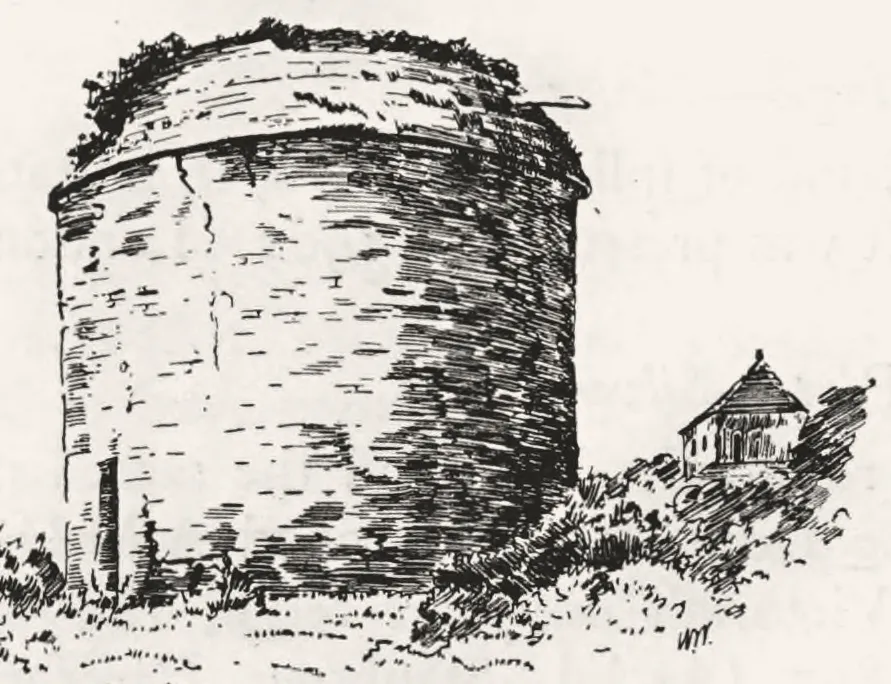
A short walk from the church stands the round stone dovecote, or columbarium, that Warren Williams drew. It was built by the Knights Hospitaller, who took over from the Templars. An inscription read in the 19th century gave its date as 1326, though it is now worn illegible. It is listed Grade I.
About the drawings
The originals of these drawings hang on our wall at Ruthlin. They were a generous Christmas present, and only years later did we discover they had been published. They appear in Bygone Days in the March Wall of Wales, written by an author who signed only as “M.N.J., late of Blackbrooke” and published by the St. Catherine Press in 1926.
The artist, Warren Williams (1860–1941), was a landscape and coastal painter from Conwy in North Wales who trained at the Liverpool School of Art. Most of the drawings are signed and dated ’99, some 27 years before the book appeared.
Drawings by Warren Williams (1860–1941), 1899, published in M.N.J., Bygone Days in the March Wall of Wales (St. Catherine Press, 1926). From our own walls at Ruthlin.
For walks, pubs and days out from Ruthlin, see things to do near Skenfrith.